
How to Find a Job in Japan (in 2026)
Finding a job in Japan can be extremely easy… or extremely difficult. It all depends on what kind of job you’re talking about.
1. Finding a Baito in Japan (Part-Time Job)
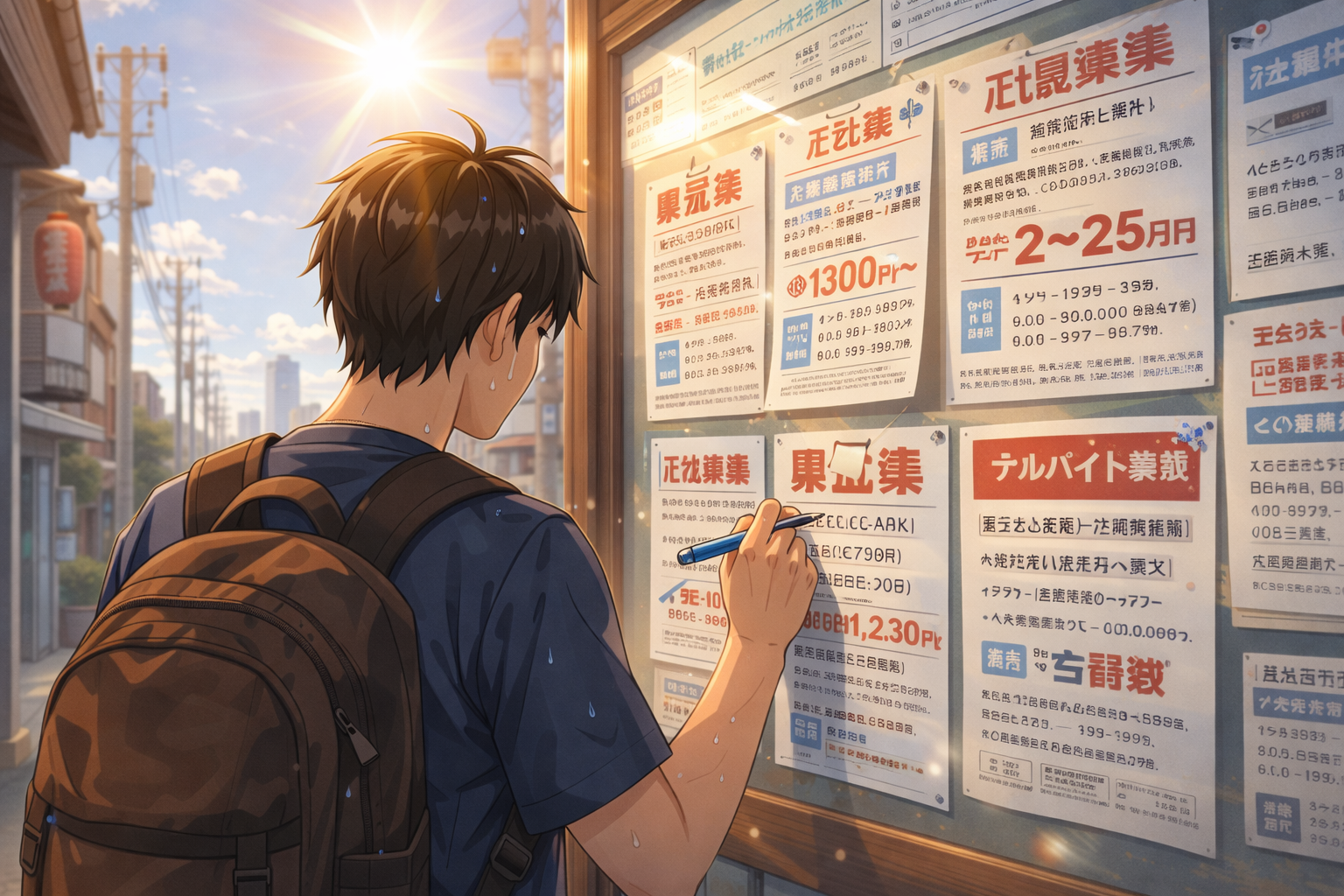
If you’re looking for a baito (part-time job, small job, sometimes even full-time but without major qualifications), honestly… it’s very easy.
Call the local restaurant. Walk in and ask directly. Check Indeed. In one afternoon, you can easily land 4 or 5 interviews. Japan currently has a real labor shortage, especially in restaurants, hotels, and logistics.
I personally worked on highways installing construction signs to prevent accidents, in an onigiri shop in Miyajima, in a pizzeria in Nagoya, in a hotel, and more. And honestly, the nicest experiences were working for small local shops with a cool boss.
My favorite? Making onigiri in Miyajima. The owner was super kind. We would drive together every day in his small car, take the ferry back and forth. It was simple, human, authentic. That’s Japan too.
(For baito jobs: don’t stress. Back then, I even found work without submitting a proper Japanese CV. I was walking around with my Western CV just translated into Japanese… So for baito jobs, really — no stress.)
2. Finding a “Real” Job in Japan (Long-Term Employment)
Now it gets more serious.
If you’re looking for a stable job and a company willing to sponsor a work visa, you need to be strategic.
Step 1: The Rirekisho (Japanese CV)
You need to write a rirekisho (履歴書), the Japanese resume.
It’s very different from a Western CV:
Standardized format
Professional photo required (clean haircut, dark suit, neutral background)
Strict chronological order
Detailed personal information
Practical tips to create it online:
Use websites like Mynavi Resume Maker (マイナビ履歴書メーカー) or Indeed Japan to generate a template automatically.
Fill everything in Japanese, even foreign experiences.
In the 志望動機 (motivation section), explain clearly why you want to work for THAT specific company. Not a generic paragraph.
Stay humble. No need to oversell yourself like on Western LinkedIn.
A Japanese CV is not “creative.” It’s clean, structured, serious. And yes — the photo matters a lot.
Step 2: Where to Look?
Just like in your home country, you need to use the right platforms:
Indeed Japan
Recruit (リクナビ)
Career Plus
Daijob (for international profiles)
Hello Work
Apply. A lot. Volume matters.
Often, you’ll receive a short phone call before the interview. Be prepared.
When answering the phone, say:
「お世話になります、〇〇と申します。」
(Osewa ni narimasu, XX to moushimasu.)
It’s simple, but it shows you understand Japanese professional etiquette.
Step 3: The Job Interview in Japan
Prepare your interview vocabulary. Learn basic keigo (polite Japanese). But most importantly: don’t panic.
If you make small Japanese mistakes, that’s normal. You’re a foreigner. No one expects perfect Japanese — but they do expect respect and effort.
Essential phrases to know:
When entering:
「本日はお時間をいただきありがとうございます。」
(Honjitsu wa ojikan o itadaki arigatou gozaimasu.)
To introduce yourself:
「〇〇と申します。本日はよろしくお願いいたします。」
(XX to moushimasu. Honjitsu wa yoroshiku onegai itashimasu.)
If you don’t understand a question:
「申し訳ありません、もう一度お願いしてもよろしいでしょうか。」
At the end:
「本日は貴重なお時間をいただき、誠にありがとうございました。」
Arrive 10 minutes early. Wear a simple, conservative suit. Bow properly (no need to exaggerate, just clean and respectful). Don’t interrupt. Don’t be overly expressive. Japan values stability.
After the interview, if you have the email address, send a short thank-you message the same evening. It always leaves a good impression.
In Japan, attitude matters a lot.
The Reality
Finding a baito in Japan? Very easy.
Finding a long-term job with work visa sponsorship? More demanding — but absolutely possible if you have:
Solid Japanese (ideally JLPT N3 minimum, N2 for most traditional companies)
Real motivation
Discipline
Don’t look for shortcuts. Put yourself intentionally in Japanese environments.
Personal Advice
If you truly want to work in Japan, study Japanese every single day.
Use tools like YumeGo. Immerse yourself. Have conversations. Read.
Japanese is the key.
Without Japanese, your options are limited.
With Japanese, doors start opening
Related articles

How to Move to Japan in 2026
How to move to Japan in 2026? Discover the most realistic and effective strategy: Working Holiday visa, student visa, then work visa. Prepare your move seriously, improve your Japanese, and maximize your chances of staying in Japan long term.

Find an Apartment in Japan : Complete Guide 2026
Finding an apartment in Japan can be confusing for foreigners. Learn how renting works, the hidden fees, and why knowing Japanese is essential for living in Japan.

First Trip In Japan
I remember it as if it were yesterday, impossible to forget those sensations.We arrived on February 10th, accompanied by my lifelong partner in crime. The birth date of Japan also happened to be his b...
Find a Share House In Japan
Finding a Share House in Japan:Moving to Japan is an incredible adventure, but one of the first major steps is finding housing. For many foreigners, a share house is the simplest, fastest, and most ac...